
Facelift surgery (rhytidectomy) is the most effective surgical method used to erase the signs of ageing and gravity on the face and achieve a younger, more dynamic appearance. However, a successful operation performed by an expert surgeon, such as Op. Dr Onur Oğan , who specialises in plastic, reconstructive, and aesthetic surgery, is only one side of the coin. Dr. Onur Oğan's expertise as a surgeon is only one aspect of the overall process. The second side is the disciplined recovery process the patient will undergo post-surgery.
In this comprehensive guide, we will examine what needs to be done after a facelift, day by day, covering every detail, from when the swelling will subside to your diet. We aim to ensure that you complete your recovery process as comfortably as possible and achieve the result you desire with confidence.
The first few hours after surgery are the most crucial period, as the tissues begin to show signs of healing. You will usually be kept under observation in the hospital overnight.
Many patients wonder, ‘How long does the recovery process take after a facelift?’ Here is what you can expect week by week:
The second and third days after surgery are when swelling is at its most intense. This should not alarm you; your body reacts this way as part of the healing process.
Most stitches are removed between the 7th and 10th days. Bruising begins to fade and subside.
The feeling of tightness in your face diminishes, and numbness may give way to tingling. This is a sign that the nerve endings are healing.
One of the questions our patients ask most frequently is, ‘When will my facial contours settle?’ Facelift surgery is an art that requires patience.
What not to do after a facelift is just as important as what to do.
Healing incision scars are extremely sensitive to sunlight (UV). If you do not use high-factor sunscreen and wide-brimmed hats for the first 6 months, the scars may darken permanently (pigmentation disorder).
Smoking constricts blood vessels, reducing the amount of oxygen reaching the tissue. This can lead to stitches opening or skin loss (necrosis). Smoking should be stopped at least 3 weeks before surgery and avoided until healing is complete.
Sleeping on your stomach or side may cause asymmetry by putting pressure on the newly reshaped tissues. You should sleep on your back for at least one month.
If you are undergoing a mid-facelift rather than just a lower face lift, the focus of recovery will shift to the cheekbones and lower eyelid area. Swelling in this area may descend towards the cheeks due to gravity. During this process, lymphatic massages (with your doctor's approval) can significantly speed up recovery.
Your body needs energy to build new tissue:
|
Timeline |
Expected situation |
What to do |
|
The first 48 hours |
Maximum oedema, slight pain |
High pillow, cold compress, rest |
|
Week 1 |
Reduction in bruising, itching at the suture sites |
Use of prescription drugs, dressing changes |
|
Week 2 |
Gradual return to social life |
Light make-up, removal of stitches |
|
1. Month |
The forming of the face shape |
Light exercise, sun protection |
|
3-6 Months |
Tissue softening |
Routine checks, scar care |
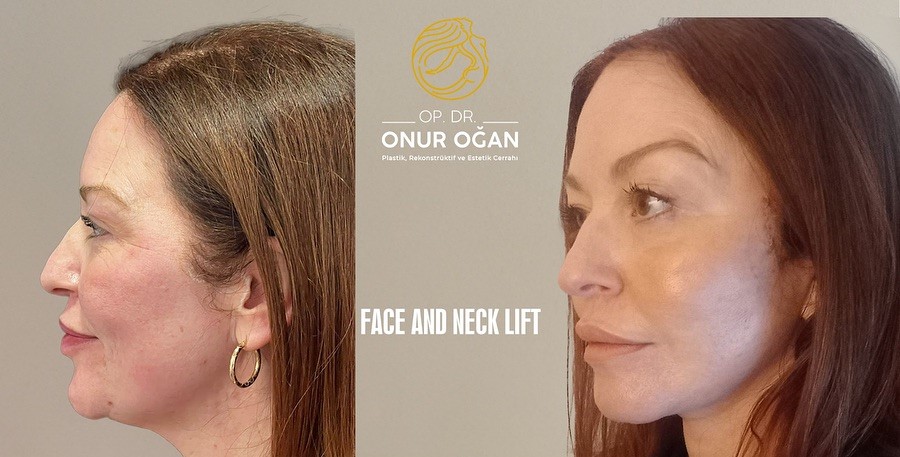
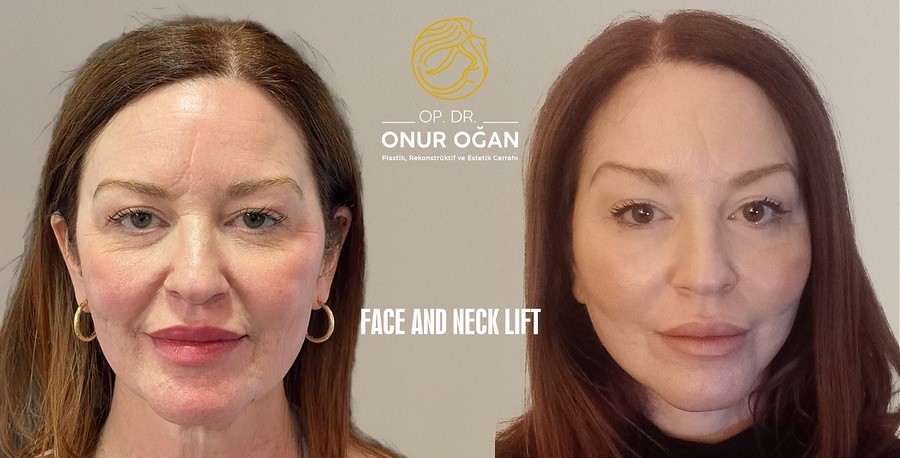
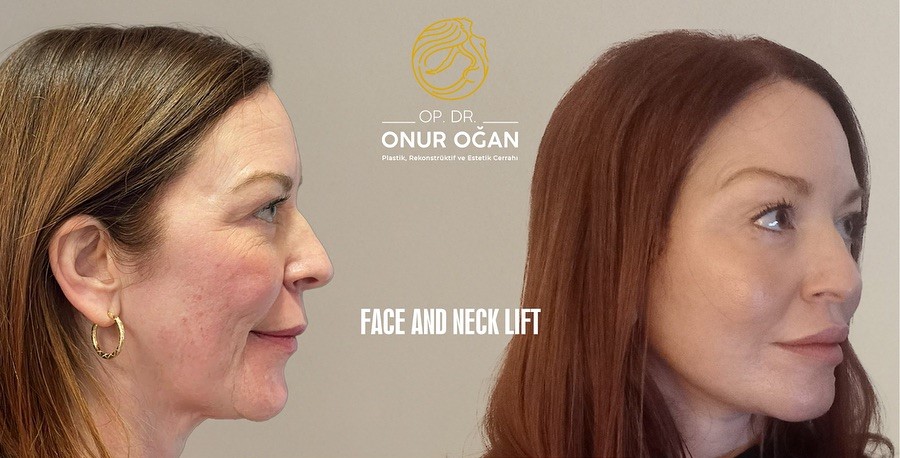
Note
Cristina travelled from Latvia for her facelift journey and shared how supported she felt every step of the way.
With constant care from the medical team and her coordinator, she never felt alone, and she is now happier, stronger, and grateful for her transformation.
Contrary to popular belief, facelift surgery does not cause severe pain. It is more of a feeling of tightness and pressure. This can be easily managed with simple painkillers prescribed by your surgeon.
Surgical incisions are concealed in front of the ear, behind the ear, and within the scalp, so they become almost invisible once healing is complete. The scars, which appear pink for the first few months, fade to a skin colour after a year.
You can usually shower 2-3 days after surgery, without exposing the stitches to scorching water or rubbing them. However, you should avoid using the hairdryer on a hot setting.
Pressure bandages applied immediately after the operation are usually removed after 1-2 days. Afterwards, depending on your doctor's recommendation, a light facial corset worn especially at night may support the process.
A facelift has the potential to reverse the ageing process by 10 to 15 years. The ageing process does not stop, but you will always continue to look younger than your peers. A healthy lifestyle and protection from the sun will prolong this effect.
To get more and detailed information, it's best to consult a board-certified Op. Dr. Onur Oğan experienced in performing facelift procedures.