
Facelift is one of the most effective cosmetic procedures to restore a youthful look to the face. But today’s facial rejuvenation is no longer a one-size-fits-all treatment. There are now a variety of facelift techniques available, each designed to address specific concerns, age groups, and degrees of skin laxity.
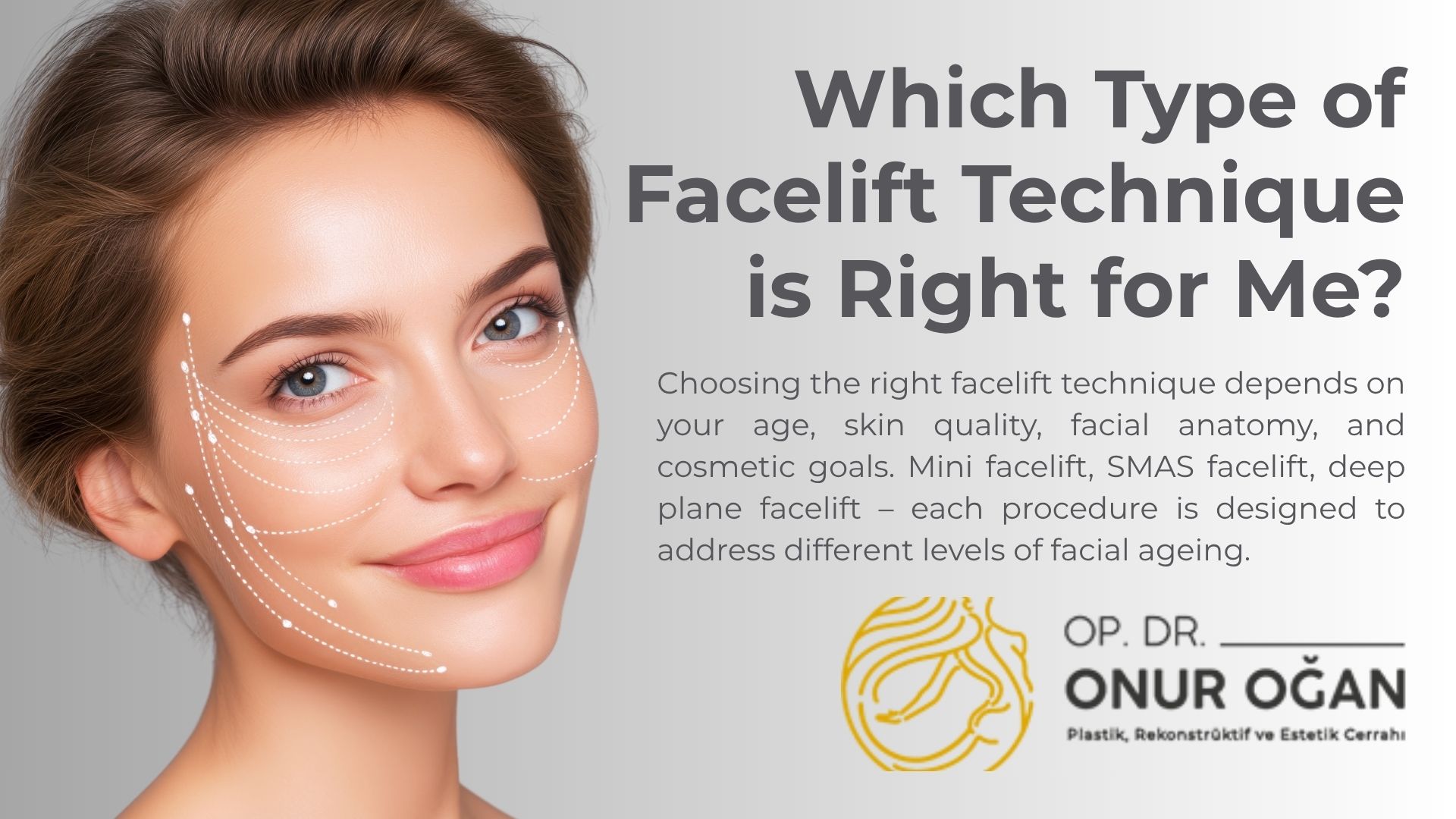
If you're wondering, "Which facelift is right for me?" this blog covers the most common types of facelifts, who they are suitable for, and how to choose the right one for your needs. It depends on your facial anatomy, skin quality, age, aesthetic goals, and the recommendations of an experienced facial plastic surgeon.
A facelift, or rhytidectomy, is a surgical procedure to improve the visible signs of facial ageing by tightening the underlying facial tissues, removing excess skin and repositioning sagging structures.
A facelift can enhance the following:
Modern facelift procedures are more focused on improving the natural contours of the face, rather than simply pulling the skin tight.
You may be a good candidate for a facelift if you notice:
While age is not the only factor in determining candidacy for a facelift, most people are between 40 and 70 years old when they decide to have the procedure.
There are various facelift techniques for different levels of ageing.
One of the least invasive surgical facelift procedures is a mini facelift.
It is mainly concerned with:
Small incisions are made around the ears to allow the surgeon to tighten underlying tissues and remove a small amount of excess skin.
Best for
Advantages
Limitations
It does not adequately treat:
For many patients, the gold standard is the SMAS (Superficial Musculoaponeurotic System) facelift.
The surgeon tightens the deeper layer that supports the face, called the SMAS, instead of just tightening the skin.
This provides:
Best for
Advantages
Results often last 10-15 years.
SMAS Facelift and Deep Plane Facelift
The key differences between traditional SMAS facelifts and the deep plane facelift, explaining facial anatomy layer by layer and why addressing the deeper structures of the face is essential for long-lasting, natural results. Understanding how and where the face truly ages allows us to plan surgeries that restore harmony rather than simply tighten the skin.
Every face is unique, and the right technique is always chosen based on individual anatomy and needs.
Which facelift technique is right for you?
The answer isn’t just about age; it’s about facial anatomy, degree of deformity, and long-term planning.
Dr. Onur Oğan explains when SMAS techniques are the safer choice and why preserving future options matters in facelift surgery. Every face is unique. So is the right technique.
Is treating just one area enough?
Facial rejuvenation is about balance.
In some cases, treating only the lower face and neck may be enough, but in others, it can create a mismatch with the rest of the face.
That’s why the right plan is always personalized, based on each patient’s needs.
Can a facelift ever go back to how it was before?
One of the most common questions we receive:
“Will my face ever return to its pre-surgery state?”The answer depends on the starting point.
A facelift turns back the clock, but aging continues. That’s why correct timing and proper patient selection are just as important as the technique itself.Surgery isn’t just about today.
It’s about planning the right moment for long-term benefit.
The deep plane facelift is one of the most advanced facelift techniques available today.
Rather than separating the skin from deeper tissues, the surgeon lifts the skin and underlying facial structures together as one unit.
This releases key facial ligaments and restores youthful facial volume.
Best for
Advantages
Swelling may be more marked initially, but most patients recover within 3 to 4 weeks, with continued improvement over a period of months.
The mid-face naturally loses volume with age.
A mid-facelift focuses on the following:
Rather than treating the neck or jawline, it restores youthful cheek position.
Best for
Patients with:
Often, surgeons combine a mid-facelift with eyelid surgery for complete facial rejuvenation.
A lower facelift specifically targets the following:
It leaves the forehead and upper cheeks largely untouched.
Best for
People whose primary concern is
This procedure is frequently combined with neck lift surgery.
Many patients focus on facial wrinkles but overlook the neck.
A neck lift addresses the following:
When combined with a facelift, it creates a balanced, harmonious appearance.
Although every patient is unique, certain procedures are more commonly recommended for different stages of ageing.
| Age | Common Recommendation |
|---|---|
| 40–50 years | Mini Facelift |
| 45–60 years | SMAS Facelift |
| 50–70 years | Deep Plane Facelift |
| 55+ years | Facelift with Neck Lift |
Age alone should never determine treatment. A healthy 65-year-old with good skin quality may have better surgical options than someone much younger with advanced skin laxity.
The longevity of facelift results depends on the technique used, genetics, lifestyle, and skin quality.
Typical expectations include the following:
Although the aging process continues, patients generally continue to look younger than if they had never undergone surgery.
One of the biggest concerns patients have is looking “overdone”.
Today’s facelift surgery is less about pulling skin tight and more about repositioning deeper facial tissues.
A good facelift should make you look refreshed and well-rested.
Friends and family often say you look healthier without knowing you've had surgery.
While injectables and energy-based treatments can address the early signs of aging, they are incapable of correcting significant tissue sagging.
These therapies are:
They can delay surgery in some patients, but they don't provide the same level of correction or longevity as a surgical facelift.
Many patients opt for a facelift along with complementary procedures to achieve more complete facial rejuvenation.
Common combinations are:
Combining procedures can improve facial harmony and also reduce the need for multiple separate recoveries.
A detailed consultation helps us decide which facelift is best for you. Your surgeon will take into account a number of factors, including:
The procedure should be chosen based on your unique facial anatomy, not just age.
The type of facelift will determine your recovery, but most patients can expect the following:
Week 1
The swelling and bruising are most marked.
Take it easy and don’t do anything strenuous.
Week 2
Bruises begin to fade.
Many people are comfortable returning to light social activities.
Weeks 3-4
Most of the swelling is gone.
Results are starting to look more natural.
Months 3–6
Scars keep getting softer.
The final facial contours are becoming visible.
It is very important that you follow your surgeon’s postoperative instructions to ensure proper healing and long-lasting results.
It is a very personal decision to choose the right facelift. The best approach will be guided by your facial anatomy, the extent of aging, and the desired outcome, whether you are considering a mini facelift, a SMAS facelift, a deep plane facelift, or a facelift combined with a neck lift.
The most effective way to find out which technique will deliver the most natural, balanced, and long-lasting results is through a personalized consultation with an experienced facial plastic surgeon. An experienced facial plastic surgeon can recommend the most appropriate technique based on your facial anatomy, skin quality, and aesthetic goals.
Deep plane and SMAS facelifts are usually said to look the most natural, because they move deeper layers of facial tissue rather than just tightening the skin.
Yes, a mini facelift can provide patients with mild to moderate signs of aging with a huge boost of rejuvenation with fewer incisions and a shorter recovery period.
Most patients experience mild to moderate discomfort, not severe pain. Discomfort is well controlled with prescribed medication for the first few days.
There is no perfect age. Most patients choose to have facelift surgery between the ages of 40 and 60, but the ideal time for you will depend on your skin quality, your facial aging, and your personal goals.
The incisions for a facelift are made carefully around the ears and hairline to hide the scars as much as possible. Given the right healing, they fade away over time and become hard to see.
“This page is for informational purposes only. For diagnosis and treatment, please consult your doctor.”To get more and detailed information, it's best to consult a board-certified Op. Dr. Onur Oğan experienced in performing facelift procedures.